Our Process
"Our philosophy is best expressed in the choices we make"
We at LEAP follow - The Experiential Learning Philosophy
What is Experiential Learning?
Experiential Learning may be defined as education that occurs as a direct participation in the events of life. It includes learning that comes about through reflection on everyday experiences. Education has created models to describe the learning that goes on in an attempt to understand how the process works why it is so effective. In all there are nine models, we will discuss four.
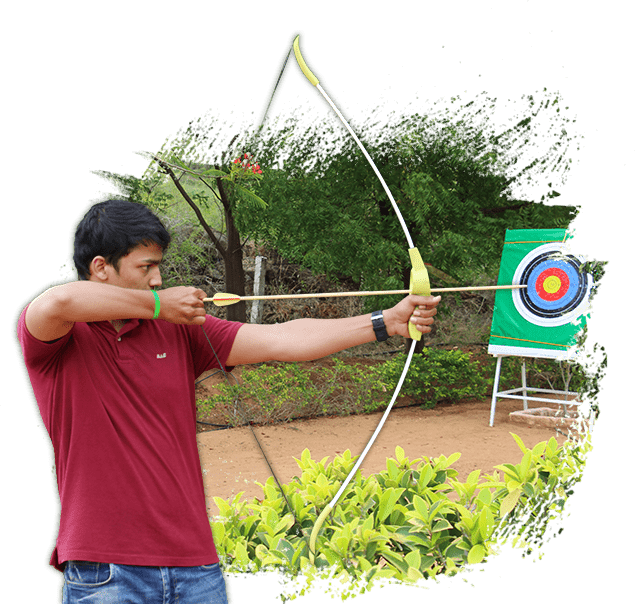
Stage 1 - Experience
Stage 1 is simply that experience alone issufficient for learning; and in many cases this is true. This underlying philosophy traces back to the oft-used Confucius quote (from around 450 BC):
Tell me, and I will forget. Show me, and I may remember. Involve me, and I will understand.
The goal of education from this point of view then would be to structure and organize learning activities in which experiences themselves facilitate learning.
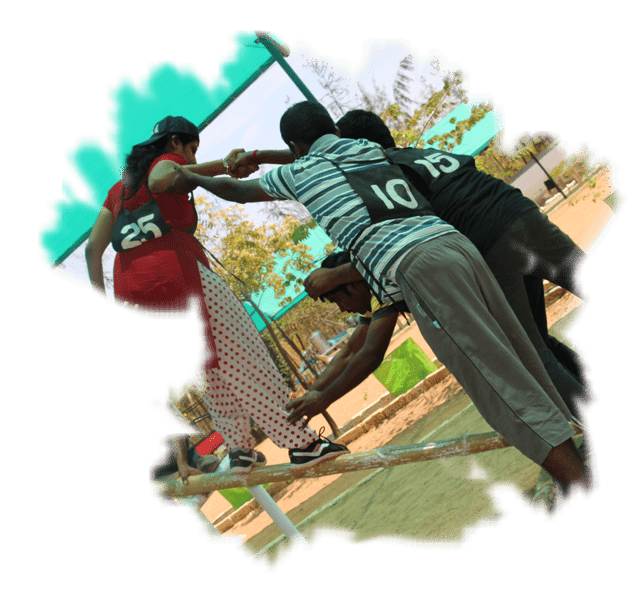
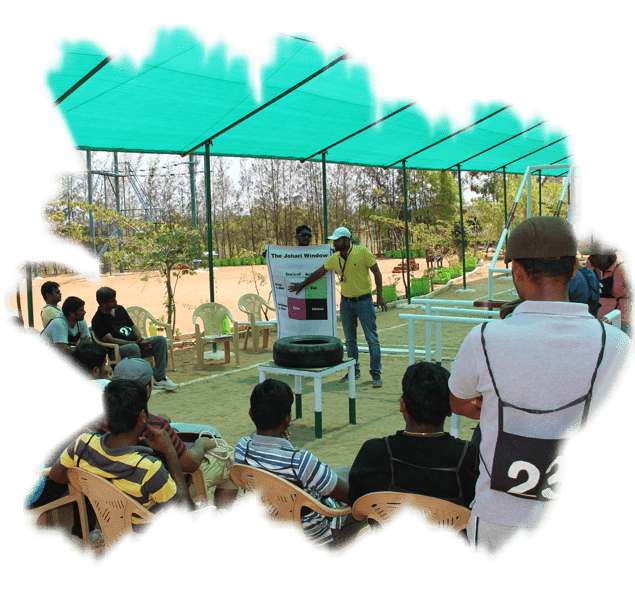
Stage 2 (experience – reflection)
In stage 2 the experiences are followed by periods of reflection which is an effective way to structure and facilitate experiential learning. We at LEAP have experienced facilitate the sessions and which makes the learning permanent
Stage 3 (experience –reflection – plan)
Stage 3 suggests that following an experience and reflection, it is helpful to develop a plan for future experience.
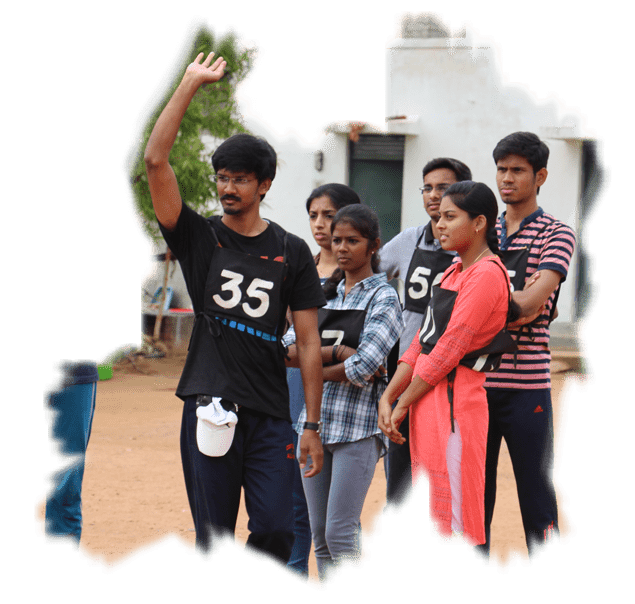
Stage 4 (experience – reviewing – concluding –planning.)
Stage 4 is applying the learning in a new experience. We at LEAP have various activities one after the other, so that the learning is delivered in a fully effective manner.
REASONS WHY EXPERIENTIAL LEARNING PROGRAMS IS EFFECTIVE
Equality :
Provides a unique set of projects and situations requires people to draw upon genuine team process skills.
Disequilibrium :
A state of disequilibrium or disorder allows emphasis to be placed upon both task and process related themes as the group has to organize itself around the challenge.
Personal Projection / Meta Learning :
The group projects their problem-solving skills, project management ability, and leadership style onto the experience. The learning arising from this is profound and revealing.
Kinesthetic Imprint :
Kinesthetic imprint or whole body learning of cognitive principles because the learning is graphic as it involves physical, mental and behavioral dimensions.
Diversity of Strengths :
Input from all team members will be required to produce outcomes from projects specifically designed not to suit just one team role style or behavior. One person cannot possibly succeed alone and so the interdependence of the team is highlighted along with the importance of diversity within the team.
Fun :
The environment provides a highly enjoyable way to learn and develop team and management process skills. Fun is a powerful aspect of effective learning with participants becoming more open to the experience and creative whilst participating in it.